If lying awake at 1am scrolling through your phone is a familiar feeling, you've probably come across both yoga nidra and sleep meditation as suggested fixes. They sound similar, get lumped together a lot, and actually work in slightly different ways — with a small but growing body of research behind yoga nidra specifically for sleep.
What Is Yoga Nidra?
Yoga nidra — sometimes called "yogic sleep" — is a guided practice where you lie down completely still while a voice leads you through a structured body scan, usually moving attention through different parts of the body in sequence. Despite the name, it has little to do with yoga poses; there's no movement involved at all.
Sessions typically run 20 to 45 minutes and follow a fairly fixed structure: settling in, setting an intention, the body scan itself, then a gradual return to full alertness. The aim is to stay lightly aware while the body relaxes as deeply as it would during sleep.
What Is Sleep Meditation?
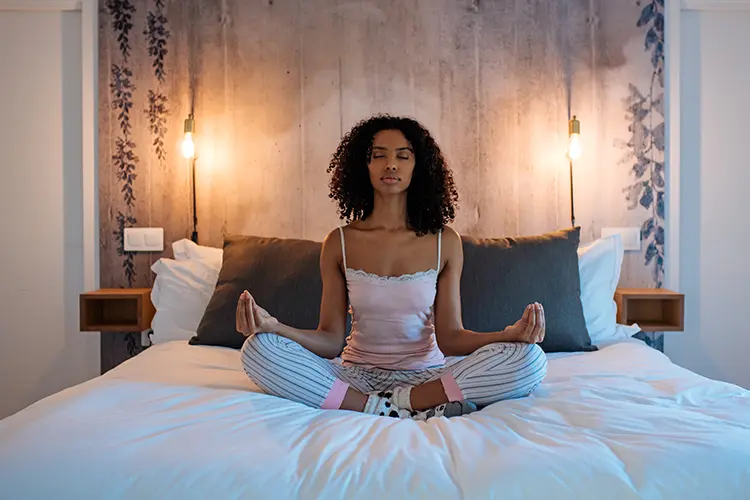
"Sleep meditation" is a broader, less formal term that covers a range of shorter techniques aimed specifically at falling asleep — breathing exercises, gentle visualisations, or simple body relaxation sequences. It's less structured than yoga nidra and usually shorter, often 5 to 15 minutes.
If you've never tried either, our general guide to meditation for beginners covers the basic skills both practices build on.
Yoga Nidra vs. Sleep Meditation: Key Differences
The biggest practical difference is structure and length. Yoga nidra is longer and more guided, following a specific body-scan sequence almost every time. Sleep meditation is more flexible and shorter, which makes it easier to fit into a quick pre-sleep routine.
The second difference is intent. Yoga nidra is traditionally meant to be practised while staying slightly aware, even though falling asleep during it is common and not considered a failure. Sleep meditation is usually aimed directly at falling asleep, full stop — there's no expectation of staying aware throughout.
- Yoga nidra: longer sessions (20–45 min), structured body scan, lying down
- Sleep meditation: shorter sessions (5–15 min), more flexible format, can be done anywhere you're trying to relax
- Yoga nidra suits racing minds that need something detailed to follow
- Sleep meditation suits people who just need a gentle nudge toward sleep
Which Sleep Technique Should You Try First?
If your mind tends to race at bedtime and you struggle to switch off thoughts about the day, yoga nidra's longer, more detailed structure gives your brain something specific to follow, which can crowd out racing thoughts more effectively than a shorter practice.
If you fall asleep reasonably easily but wake up during the night and struggle to drift off again, a short sleep meditation is often more practical — you don't want to commit to a 30-minute body scan at 3am.
"Neither practice is a guaranteed cure for poor sleep, but both give your mind somewhere productive to go instead of spiralling through tomorrow's to-do list."
Practical Tips for Yoga Nidra and Sleep Meditation
Keep the room slightly cool and dim, use headphones or a speaker at a comfortable volume rather than maximum, and don't worry if you fall fully asleep before a session ends — for sleep-focused practice, that's a result, not a failure to "do it properly."
What the Research Says About Yoga Nidra and Sleep
A randomised controlled trial published in 2021 compared yoga nidra with cognitive behavioural therapy for insomnia (the standard non-drug treatment) in patients with chronic insomnia. Both approaches improved total sleep time, sleep efficiency, and time spent awake during the night, measured using sleep diaries and, in some participants, overnight sleep lab monitoring. It's a small study and not a substitute for professional treatment of diagnosed insomnia, but it's a reasonable signal that yoga nidra's effects on sleep aren't purely anecdotal. You can read the trial via PubMed.
New to meditation generally? Start with the basics before trying either of these.
How to Meditate: A Beginner's GuideFrequently Asked Questions
No. Yoga nidra aims to keep a thin thread of awareness while the body fully relaxes — practitioners describe it as resting between waking and sleep. It's common to drift into actual sleep partway through, which is fine, but the practice itself is distinct from sleep.
Yes, and many people do it specifically as part of a bedtime routine. Just be aware you may fall fully asleep before a guided session ends, which is a perfectly fine outcome if your goal was better sleep anyway.
Both can help, but yoga nidra's longer, more structured body-scan format tends to suit people whose minds race at bedtime, since it gives the brain something specific to follow. Shorter sleep meditations suit people who fall asleep fine but wake during the night.
Not strictly, but both practices are usually guided by a recorded voice, since following along is easier than self-directing while trying to relax. Free guided sessions are widely available without a paid subscription.
Mindfulness Matters
Plain-English guides to meditation, yoga, and energy healing — written for people who are curious but new, with no jargon and no pressure to "get it right" straight away.